Understanding Osteoarthritis: What It Is, How It Affects You, and When to Seek Advanced Orthopedic Care
Osteoarthritis is one of the most common joint conditions in the United States, affecting approximately 33 million adults according to the CDC. It’s especially prevalent in older adults, with more than half of people aged 75 and older having diagnosed arthritis or osteoarthritis.
Although there is no cure for osteoarthritis, modern orthopedic medicine offers a full continuum of care, from conservative symptom management to advanced surgical solutions, for patients living with joint pain, stiffness, swelling, and reduced mobility.
At Kansas City Orthopaedic Institute (KCOI), patients have access to an orthopedic team equipped with the surgical expertise, advanced imaging, and specialized resources to manage osteoarthritis at every stage, including cases that require more than routine outpatient care.
Understanding how osteoarthritis develops, how it progresses, and when it’s time to escalate care can help you make informed decisions about your treatment path.
What Is Osteoarthritis?
Osteoarthritis is a degenerative joint disease that occurs when the protective cartilage between your bones gradually wears down. Over time, this can lead to pain, stiffness, swelling, and reduced mobility. Osteoarthritis is most common in the knees, hips, hands, and spine, but it can potentially affect almost any joint.
The condition develops slowly, often over many years, and for many patients it eventually progresses beyond what conservative treatment alone can manage. That’s where KCOI comes in: our orthopedic surgeons are here to help.
Common Osteoarthritis Symptoms
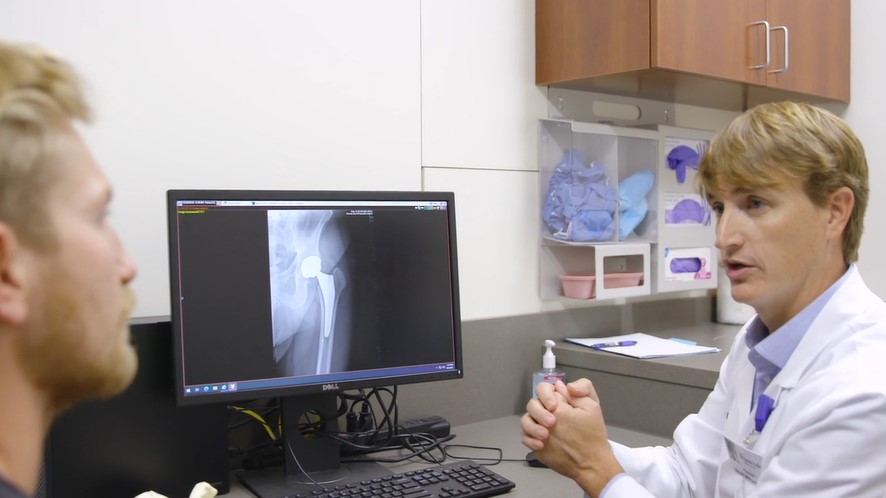
Osteoarthritis symptoms vary from person to person, but most people notice changes that gradually become more noticeable over time. You might experience:
- Joint pain during or after movement
- Morning joint stiffness that improves as the day goes on
- Swelling around the affected joint
- Reduced flexibility or difficulty fully moving the joint
- A grating or clicking sensation when the joint moves
- Tenderness when pressing around the joint
Symptoms often worsen with age and can be influenced by previous injuries, repetitive stress, or genetic factors. When these symptoms progress to the point where they significantly limit your mobility or daily function, KCOI is positioned to evaluate whether advanced treatment, including joint preservation or replacement, is appropriate.
Why Does Osteoarthritis Happen?
Osteoarthritis is often the result of natural wear and tear, but several factors can increase your risk:
- Age: Risk increases as you get older
- Gender: Women are more likely to develop osteoarthritis
- Previous injuries: Even old injuries can contribute
- Repetitive movements: Jobs or activities that stress the joints
- Genetics: Family history can play a role
- Weight: Extra weight adds stress to weight‑bearing joints
- Bone deformity: Some people are born with abnormal cartilage or joints
- Metabolic conditions: Hemochromatosis and diabetes can cause osteoarthritis
A precise understanding of what’s driving your osteoarthritis is essential when advanced treatment is on the table. KCOI’s diagnostic imaging helps your physician pinpoint the extent of joint damage before recommending a course of action.
How Osteoarthritis Progresses Toward Surgical Care
 For many patients, osteoarthritis is manageable for years with conservative treatment. But as cartilage continues to break down, some patients reach a point where pain, stiffness, and loss of mobility no longer respond to medication, injections, or physical therapy alone.
Unlike outpatient clinical care alone, KCOI offers the full infrastructure of a dedicated orthopedic hospital: surgical suites, inpatient recovery support, specialized rehabilitation, and fellowship-trained surgeons who perform advanced procedures daily.
When to Seek Advanced Orthopedic Care
Many patients delay escalating their care because they aren’t sure when conservative treatment has run its course. Consider connecting with a KCOI specialist if:
- Your pain is persistent or steadily getting worse despite treatment
- Conservative options — medication, injections, physical therapy — no longer provide relief
- Imaging shows significant joint damage or bone-on-bone contact
- Your mobility has declined to the point of affecting independence
- You and your provider are discussing joint replacement or another surgical option
Getting a timely evaluation from a surgical team can help you understand your options before joint damage progresses further.
Osteoarthritis Treatments Available at KCOI
Because osteoarthritis affects everyone differently, treatment at KCOI spans the full spectrum of care — coordinated within a hospital setting that can move from diagnosis to procedure without unnecessary delay.
Conservative and Non-Surgical Management

For earlier-stage osteoarthritis, KCOI providers may recommend:
- Low‑impact exercise and activity modification
- Strength‑training routines
- Weight management support
- Physical therapy
- Medications and anti-inflammatory treatment
- Corticosteroid or hyaluronic acid injections
- Bracing or assistive devices
Minimally Invasive Procedures
When conservative treatment isn’t enough, but a full joint replacement isn’t yet necessary, KCOI’s surgical team offers minimally invasive options designed to relieve pain and preserve joint function.
Joint Replacement Surgery
For advanced osteoarthritis, joint replacement — including knee, hip, and shoulder replacement — is one of the most effective treatments available. KCOI’s hospital setting allows for coordinated surgical planning, inpatient recovery, and integrated post-operative rehabilitation, all in one place.
Post-Surgical Rehabilitation
Recovery doesn’t end at surgery. KCOI’s rehabilitation and physical therapy teams work with patients through every stage of recovery to restore strength, mobility, and confidence.
A Coordinated, Hospital-Based Approach
Osteoarthritis treatment isn’t a single decision; it’s an evolving process. The Arthritis Foundation notes that combining multiple treatment strategies often leads to the best outcomes for managing osteoarthritis symptoms over time — and for patients whose condition progresses toward surgery, having that continuum of care under one roof matters. KCOI is proud to financially support our local Kansas chapter of Arthritis Foundation.
Why Choose Kansas City Orthopaedic Institute?
KCOI is a dedicated orthopedic hospital built to support patients through the most advanced stages of joint disease. When osteoarthritis progresses beyond what outpatient care can manage, KCOI provides:
- Fellowship‑trained orthopedic surgeons
- On-site advanced imaging and diagnostics
- Dedicated surgical suites for joint procedures
- Inpatient recovery and coordinated rehabilitation
- A hospital-level team built for complex and advanced cases
If your osteoarthritis symptoms have progressed beyond what conservative care can manage, you don’t have to navigate that decision alone. Contact us for any questions about your full range of treatment options, from minimally invasive care through joint replacement.