Understanding Bone Fractures: Types, Symptoms, and When to Seek Advanced Orthopedic Care
Bone fractures are incredibly common, with millions occurring each year in the United States.
They often happen in an instant. A fall, a sports injury, a car accident, or even a sudden twist can lead to a break that causes significant pain and limits your mobility. While many fractures can be managed with a cast or brace, others involve bone displacement, joint disruption, or breaks through the skin that require the surgical resources of a hospital-based orthopedic team.
At Kansas City Orthopaedic Institute (KCOI), patients have access to a hospital-based orthopedic team equipped with on-site imaging, surgical suites, and fellowship-trained surgeons who manage fractures at every level of complexity — including breaks that outpatient clinics aren’t equipped to treat.
Learning more about fractures, including how they happen, their symptoms, and when a case calls for hospital-level care, can help you calmly navigate this stressful situation.
What Is a Bone Fracture?
A bone fracture occurs when a bone is cracked, broken, or shattered due to force or stress. Fractures exist on a spectrum, ranging from small hairline cracks to severe breaks that significantly alter the bone’s alignment.
Fractures can happen in any bone, but they’re most common in the:
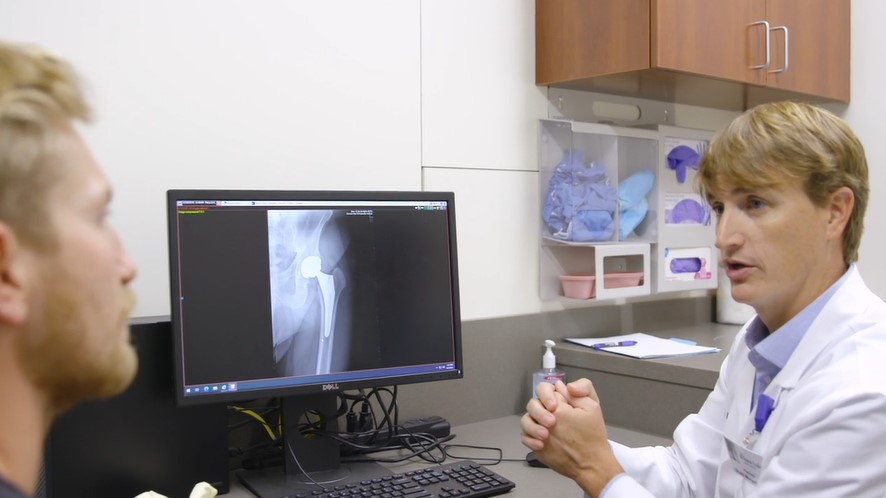
No matter the location, early evaluation is essential. For more complex breaks, KCOI’s orthopedic surgeons have the on-site diagnostic imaging and surgical resources to properly assess the fracture and determine whether surgical stabilization is needed.
Common Types of Bone Fractures
Fractures widely vary in location, severity, and the damage they cause to adjacent tissue. Understanding the type of break helps determine the best treatment plan — and whether that plan can be managed outpatient or requires hospital-based surgical care.
Hairline (Stress) Fracture
A small crack in the bone, often caused by repetitive stress or overuse.
Stable Fracture
The bone breaks, but the pieces remain aligned and in place.
Transverse Fracture
A straight, horizontal break across the bone.
Oblique Fracture
A diagonal break that may be more unstable than a transverse fracture.
Comminuted Fracture
The bone shatters into multiple pieces. These fractures typically require more advanced treatment, often including surgical fixation, beyond what a cast or brace can offer.
Compound (Open) Fracture
The bone breaks through the skin. This is a medical emergency that requires immediate hospital-level care to prevent infection and stabilize the bone surgically.
Greenstick Fracture
A partial break that’s common in children, whose bones are more flexible.
The more complex fracture types — comminuted, compound, and those involving joint displacement — are exactly where KCOI’s hospital infrastructure makes the difference between routine recovery and a complicated one.
How Bone Fractures Typically Occur
Fractures happen for many reasons in a variety of scenarios. The most common causes include:
- Falls, especially onto an outstretched hand
- Sports injuries, such as sudden impacts, twists, or collisions
- Car accidents and other high-force trauma
- Repetitive stress caused by long-distance running or high-impact activities
- Osteoporosis, characterized by weakened bones that break more easily
- Direct blows or blunt force trauma
High-force trauma, such as car accidents and severe falls, is where fractures are most likely to be complex, displaced, or open — the cases that call for KCOI’s expert orthopedic surgeons.
Bone Fracture Symptoms
Symptoms vary depending on the location and severity of the break. However, most fractures cause:
- Sudden, sharp pain
- Swelling or bruising
- Difficulty moving the affected area
- Visible deformity
- Tenderness to the touch
- Inability to bear weight
- A cracking or popping sensation when incurring the injury
Visible deformity, an inability to bear weight, or a break through the skin are signs that a fracture may require more than a standard clinic visit. In these cases, KCOI’s diagnostic imaging can quickly determine the extent of the injury and whether surgical repair is necessary.
How Fractures Affect Your Daily Life
Even minor fractures can make everyday tasks more challenging. You might notice difficulty gripping objects, walking, lifting, or performing routine activities. By extension, this can interfere with work, hobbies, and family responsibilities.
For fractures that require surgical stabilization, recovery is a longer process; one that benefits from having surgery, imaging, and rehabilitation coordinated under one roof rather than across multiple separate providers.
When to Seek Advanced Orthopedic Care
When you suspect a fracture, knowing where to turn can make the next step feel less overwhelming. For 10 years, KCOI Ortho Urgent Care has helped patients access specialized care for fractures and other acute orthopedic injuries.
Open seven days a week, it offers evaluation and treatment for injuries that occurred within the last 72 hours and do not require emergency room care. On weekdays, you can walk in or use online check-in to save your spot; weekend visits are walk-in only. Visit KCOI Ortho Urgent Care to save your spot and view hours. Check-in times are suggested, and actual wait times may vary.
Whether you need urgent care, emergency care, or evaluation by an orthopedic specialist, the following situations call for prompt medical attention:
- The bone is visibly deformed or displaced
- The fracture has broken through the skin
- Pain is severe or persistent despite immobilization
- You can’t move or bear weight on the affected limb
- Imaging shows the fracture involves a joint
- Your provider has recommended surgical evaluation
A hospital-based evaluation ensures that if surgery is needed, imaging, surgical planning, and the procedure itself can move forward without unnecessary delay.
Bone Fracture Treatments Available at KCOI
Every fracture and how it heals is unique to the person. KCOI’s hospital setting allows treatment to span the full range of fracture care, from simple immobilization through complex surgical repair.
Immobilization
Casts, splints, or braces help keep the bone stable while it heals.
Reduction (Realignment)
If the bone is out of place, a specialist may realign it — either manually (closed reduction) or, for more complex breaks, surgically (open reduction).
Physical Therapy
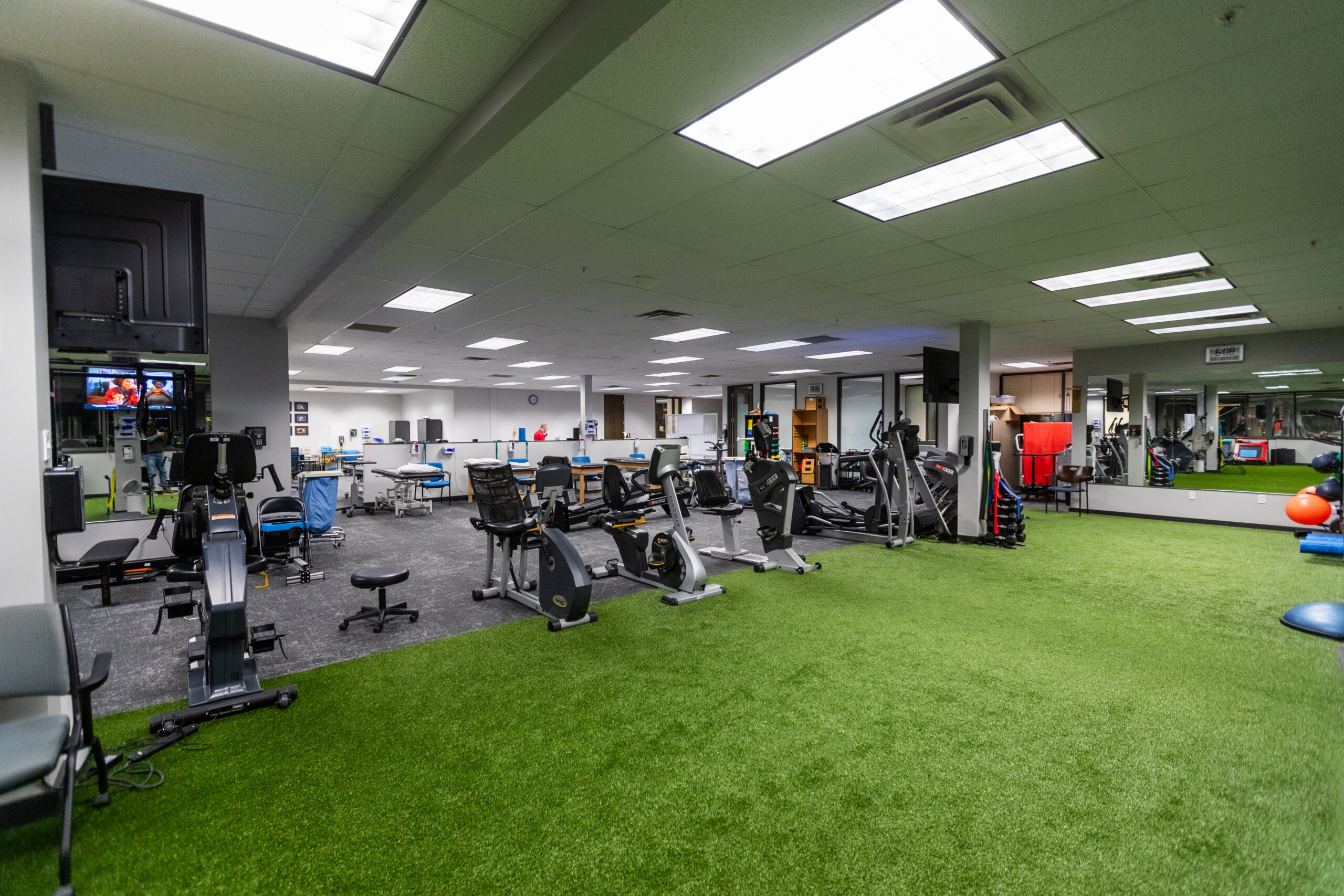
Physical therapy and rehabilitation help restore strength, flexibility, and function once the bone begins to heal.
Medications
Pain relievers or anti-inflammatory medications may help manage discomfort.
Surgical Treatment
For fractures involving displacement, multiple bone fragments, joint disruption, or breaks through the skin, surgical stabilization using plates, screws, or rods may be necessary. KCOI’s dedicated surgical suites and orthopedic trauma team allow these procedures to be performed with coordinated pre- and post-operative care.
Follow-Up and Rehabilitation Care
Monitoring healing over time ensures the bone recovers properly. For surgical patients, KCOI’s rehabilitation team supports recovery from the operating room through full return to activity.
Why Choose Kansas City Orthopaedic Institute?
KCOI is a dedicated orthopedic hospital built to manage fractures at every level of complexity, including cases that go beyond what an outpatient clinic can treat.
You’ll benefit from:
- Fellowship-trained orthopedic surgeons
- On-site advanced imaging and diagnostics
- Dedicated surgical suites for fracture repair
- Emergency fracture care
- Inpatient recovery and rehabilitation, all under one roof
- Orthopaedic urgent care available 7 days a week
If you’re experiencing symptoms of a bone fracture, especially a severe or complex one, don’t wait for things to get worse. If you have questions regarding your injury, please call us at 913-218-0800. If you have a life-threatening injury, please dial 9-1-1.
Ortho Urgent Care is intended to treat injuries that have occurred within the last 72 hours. Ortho Urgent Care is most easily accessed by using Entrance B at KCOI.
Monday – Friday: Appointments and walk-ins welcome, 8:00 AM – 7:00 PM
Saturday & Sunday: Walk-ins welcome, 10:00 AM – 4:00 PM
The last patient will be admitted at 3:00 PM on Saturdays and Sundays.